Win32++ Experiment
Win32++ is a lightweight C++ library designed to simplify the development of Win32 applications by providing a modern object-oriented framework. It enables developers to create native Windows applications using familiar C++ syntax while abstracting much of the complexity involved with raw Win32 API programming. The library offers support for common GUI components such as windows, dialogs, menus, and controls, making it easier to build robust and responsive user interfaces. Its header-only design ensures minimal dependencies, promoting faster compilation and easier integration into existing projects. Win32++ aims to enhance productivity while maintaining the performance and compatibility benefits of native Win32 programming.
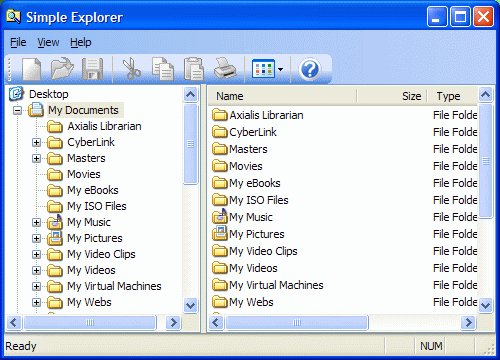
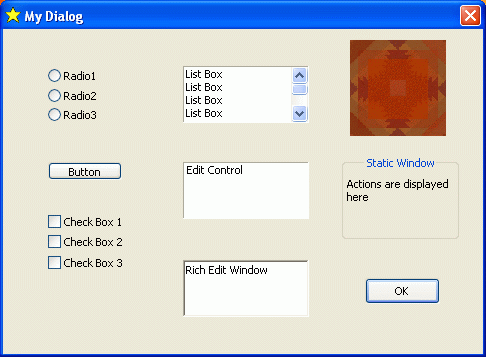
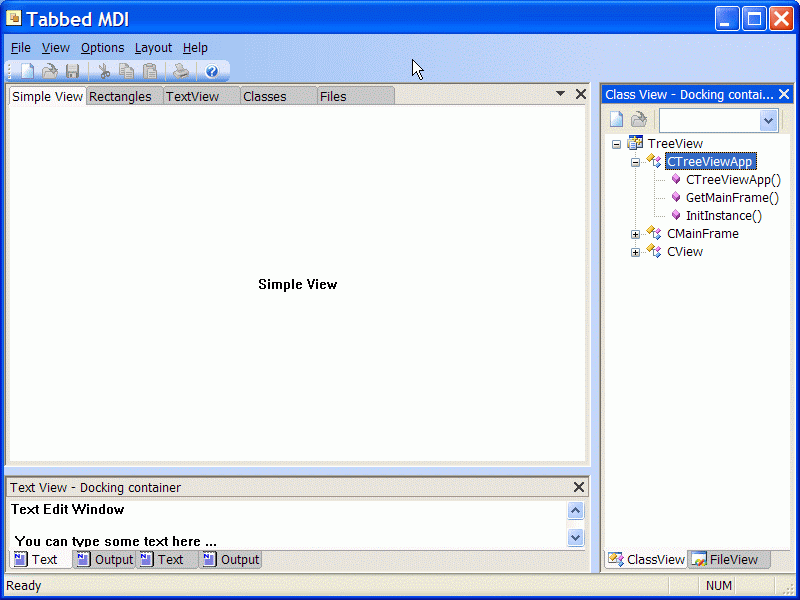
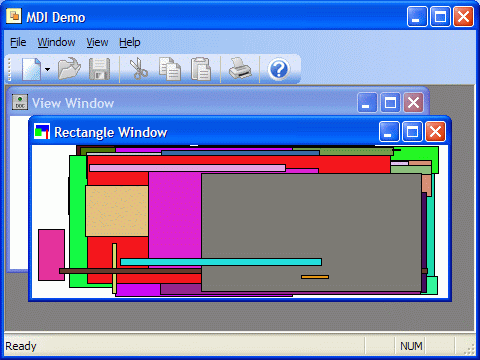
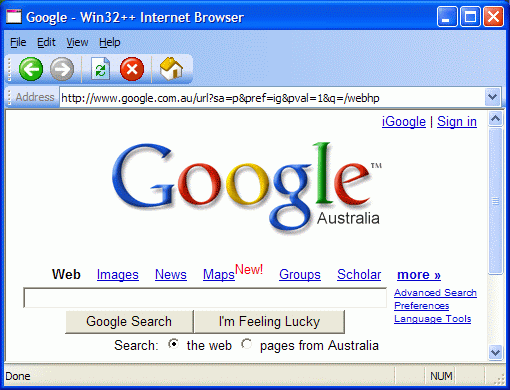
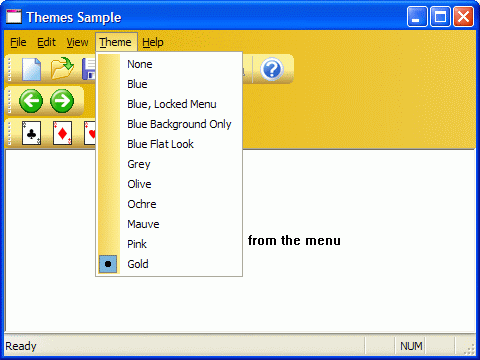
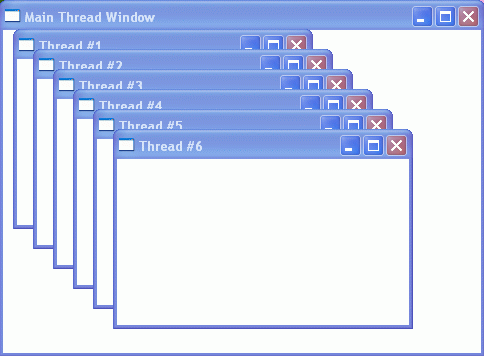
Win32++ is a C++ library used to build windows applications. Win32++ is a free alternative to MFC. It has the added advantage of being able to run on a wide range of free compilers, including Visual Studio Community, Clang, and the MinGW compiler provided with CodeBlocks and Dev-C++.
Win32++ provides a thin layer over the Windows API and is similar to MFC. There are several differences to MFC however. Win32++ uses very few macros, and doesn't use macros for message maps. All the code for Win32++ is provided in a set of header files. There is no need for any additional DLLs or libraries apart from those DLLs that are part of the window operating system. Win32++ has view windows but doesn't impose a Doc/View architecture on users. Users are free to employ a Doc/View architecture if they choose.
We are inviting you to experiment with Win32++:
Download and install Win32++
Compile the library and samples
Share your experience
Our experiment outcomes are about to be published in members area.